

The Neural Pathway: How Thought Becomes Music Today
From Prefrontal Planning to Finger Movement

In the early days of the Macintosh computer the GUI or Graphical User Interface was call the MMI or Man Machine Interface. Steve Jobs changed that to be the Mere Mortals Interface. That has pretty much stayed since 1884. A keyboard on a synthesizer is that MMI and it needs a significant upgrade in to 2020’s.
So, first fasten your seatbelts and prepare to geek out.
When a pianist conceives a musical phrase, an extraordinary cascade of neural activity transforms abstract intention into physical reality. Research has revealed that this process begins in the left lateral prefrontal cortex, which serves as the brain’s conductor, orchestrating the translation of musical ideas into coordinated motor commands. This region exhibits a graduated specialization: the anterior portions handle abstract planning (“what to play”), while posterior areas refine these plans into concrete instructions (“how to play”).
The prefrontal cortex essentially functions as a translator between the composer’s creative vision and the motor execution required to manifest that vision. Neuroimaging studies show that when musicians plan complex chord progressions, two distinct brain networks activate simultaneously”one dedicated to selecting musical content, another to coordinating the precise finger movements needed to produce those sounds. This dual-network architecture represents one of evolution’s solutions to the problem of converting thought into action.
The Motor Symphony: Primary Cortex and Supplementary Areas
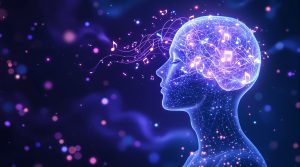 Once the prefrontal cortex has formulated its plan, neural signals cascade to the primary motor cortex (M1) and the supplementary motor area (SMA) in the frontal lobe. These regions execute the actual mechanics of performance, coordinating the complex, temporally precise movements required for musical expression. The SMA plays a particularly crucial role in what neuroscientists call “series operation””the ability to arrange diverse actions in the correct temporal sequence.
Research demonstrates that the SMA exhibits rhythmic gamma band bursts at 30-40 Hz when musicians maintain tempo, suggesting it functions as an internal metronome or dynamic clock. This neural timekeeper coordinates not just rhythm but also the initiation of novel, complex movements. Interestingly, the SMA shows heightened activity when pianists encounter unfamiliar music but remains relatively quiescent during well-rehearsed pieces. The brain, it seems, automates familiar patterns to preserve cognitive resources for creative challenges.
The motor cortex also undergoes remarkable plastic changes in response to musical training. String players, for example, exhibit enlarged somatosensory representations of their playing fingers compared to non-musicians. This expansion reflects the brain’s capacity to dedicate more neural real estate to frequently used motor programs. White matter tracts connecting auditory and motor regions”particularly the arcuate fasciculus”show increased organization in musicians, enabling the tight coupling between sound perception and motor execution that characterizes skilled performance.
The Auditory-Motor Loop: Closing the Circle
Musical performance creates a continuous feedback loop between action and perception. When pianists play a melody they’ve learned, their premotor cortex activates even during passive listening to that same melody. This auditory-motor coupling is so specific that listening to music one can play activates Broca’s area and the inferior frontal gyrus”regions traditionally associated with language production. The brain, in essence, rehearses the motor program while merely listening.
This tight integration explains why musicians can anticipate and correct errors in real-time. The superior parietal lobule continuously monitors the relationship between intended and actual sounds, feeding this information back to motor areas through what neuroscientists call sensory-motor transformations. These neural pathways enable the fluid, automatic playing that allows accomplished musicians to perform without consciously thinking about each finger movement”a state often described as the fingers “knowing” what to do.
Creativity’s Neural Signature
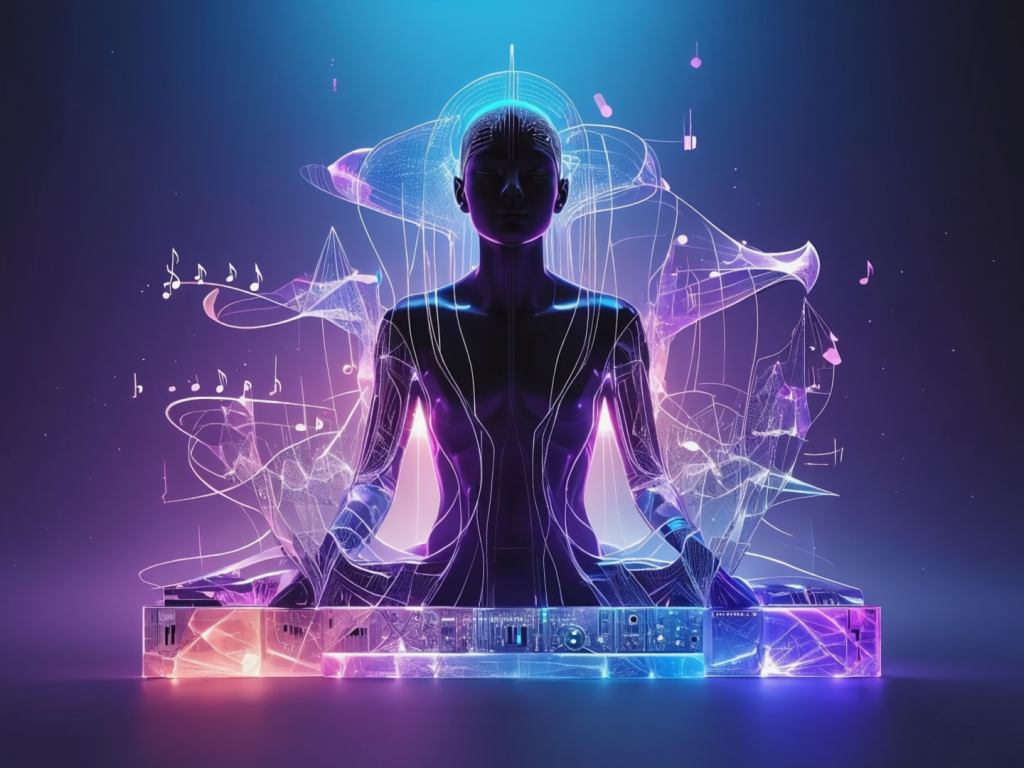 The creative act of musical composition engages yet another set of brain structures. When professional jazz musicians improvise, researchers observe a distinctive pattern: widespread deactivation of the dorsolateral prefrontal cortex (DLPFC) combined with activation of the medial prefrontal cortex (mPFC). This pattern suggests that creativity requires shutting down conscious self-monitoring and judgment while simultaneously engaging brain regions associated with self-expression and internally generated action.
Children composing simple melodies show engagement of reward structures including the caudate, amygdala, and nucleus accumbens, even without formal training. This suggests humans possess an innate neural creativity network that musical training subsequently refines and expands. The brain’s default mode network (DMN)”a constellation of regions active during mind-wandering and self-referential thought”plays a central role in generating novel musical ideas. These ideas are then evaluated and refined by the executive network, creating the interplay between spontaneous generation and critical assessment that characterizes creative composition.
The current system, for all its elegance, remains fundamentally limited. Every creative impulse must traverse multiple neural waypoints, each introducing delay and potential distortion. The thought “play a C major arpeggio with increasing velocity” requires dozens of milliseconds to translate into action, passing through prefrontal planning areas, motor cortices, spinal cord, peripheral nerves, and finally to muscles and fingers. This biological Rube Goldberg machine, while remarkably effective, represents a bottleneck between intention and expression.
The Silicon Bridge: Chips Powering Modern Synthesizers
The Motorola Revolution: DSP56000 Series
 Before we can eliminate the keyboard, we must understand the computational heart of the instruments we’re replacing. The most advanced synthesizers of the 1990s and early 2000s were powered by a family of digital signal processors that would define an era: the Motorola DSP56000 series.
Introduced in 1986, the DSP56000 represented a quantum leap in real-time audio processing capability. These 24-bit fixed-point processors operated at speeds up to 33 MHz, delivering 16.5 million instructions per second. Motorola’s engineers, working closely with audio equipment manufacturer Peavey, selected 24-bit architecture specifically for audio applications”providing a dynamic range of 144 dB, more than adequate when analog-to-digital converters rarely exceeded 20-bit resolution.
The DSP56000’s modified Harvard architecture featured separate program and data memory spaces, enabling simultaneous instruction fetch and data access”crucial for real-time audio synthesis. With hardware support for block-floating point FFT operations and dual 56-bit accumulators, these chips could perform the complex calculations required for FM synthesis, additive synthesis, and digital filtering without introducing perceptible latency.
DSP Chips in Legendary Synthesizers
The DSP56000 family powered some of the most iconic virtual analog synthesizers ever created. The Clavia Nord Lead series utilized up to six Motorola 56362 chips in its Lead 3 model, while the modular version could accommodate eight 56303 chips. The Waldorf Q, with its Microwave II predecessor, employed Motorola 56303 DSPs to achieve its signature wavetable and FM synthesis sounds. Even the phenomenally successful Korg MicroKorg”one of the best-selling synthesizers of all time”relies on a 56362 chip at its core.
The Access Virus line, particularly the Virus TI series, represented perhaps the pinnacle of DSP-based synthesis, utilizing multiple 56000-series chips to create dense, complex timbres that rivaled and often surpassed the sound quality of analog instruments. These machines demonstrated that with sufficient processing power, digital synthesis could capture the warmth and organic character traditionally associated with voltage-controlled analog circuits.
Beyond Motorola: The Evolution Continues
Modern synthesizers have largely moved beyond the DSP56000 architecture, embracing more powerful processors including ARM Cortex chips, SHARC DSPs, and custom silicon. The Elektron Digitone II and Digitakt II, released in 2024, employ sophisticated multi-core processors enabling real-time wavetable synthesis, granular processing, and complex effects chains. The Polyend Synth integrates eight distinct synthesis engines”including granular, physical modeling, and virtual analog”on a single custom DSP platform.
Some manufacturers have returned to analog signal path designs controlled by digital microprocessors, as seen in the Moog Labyrinth with its voltage-controllable wavefolder and 12dB/octave state-variable filter. Others, like Jolin’s Avalith, have created entirely novel approaches using 100 transistor-based oscillators operating in non-standard modes to generate raw, chaotic timbres. These innovations demonstrate that the frontier of synthesis technology continues to expand in multiple directions simultaneously.
The CEM Legacy: Analog Synthesis Chips
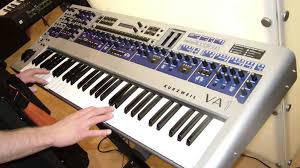 While DSPs dominated the digital synthesis revolution, analog synthesizers relied on integrated circuits from Curtis Electromusic (CEM) and Solid State Music (SSM). The CEM3394, introduced in the early 1980s, was a “complete synth voice on a chip” containing a voltage-controlled oscillator, filter, amplifier, and envelope generator”all microprocessor-controllable.
The Sequential Circuits Prophet-600 and Six-Trak used multiple CEM3394 chips to achieve polyphony. Dave Smith’s revolutionary Prophet-5, while using separate CEM components rather than the integrated 3394, established the paradigm of microprocessor control that would define all subsequent synthesizers. These chips enabled the first programmable polyphonic synthesizers”instruments that could store and recall sounds, a capability that seems mundane today but was revolutionary in 1978.
The significance of these silicon building blocks cannot be overstated. Whether analog CEM chips or digital Motorola DSPs, they represent the computational substrate that transformed synthesizers from temperamental, one-sound-at-a-time instruments into flexible, expressive tools for musical composition. Now, as we stand at the threshold of direct neural control, understanding these chips helps us appreciate both how far we’ve come and the magnitude of the leap we’re about to make.
The First Bridge: Current Brain-Computer Musical Interfaces
The Encephalophone: Music from Thought Alone
The future has already arrived in research laboratories. Dr. Thomas Deuel, a neurologist at Swedish Medical Center and neuroscientist at the University of Washington, has created the Encephalophone”the first musical instrument designed for control by pure thought. This device collects brain signals through an electrode-laden cap, transforming specific neural patterns into musical notes via a connected synthesizer.
The Encephalophone operates by detecting two distinct types of brain signals: those from the visual cortex (such as closing one’s eyes) or those associated with imagining movement. For novice users, eye-closing control proves more accurate and intuitive, but Deuel envisions future versions responding to more nuanced mental states”thinking about moving one’s arm up or down to trigger notes along an eight-tone scale. In 2017, Deuel demonstrated the instrument’s capabilities by performing live with a jazz band, reclining motionless in an armchair while his brain waves generated saxophone-like tones in real-time.
The Encephalophone’s primary application targets rehabilitation for patients with motor disabilities from stroke, spinal cord injury, or ALS. Many of Deuel’s patients were musicians before their injuries, and the device offers them a pathway back to musical expression without requiring physical movement. Early tests with 15 untrained participants showed the system was relatively easy to learn, with users rating difficulty at 3.7 out of 7 and enjoyment at 5.1 out of 7.
P300-Based Composition Systems
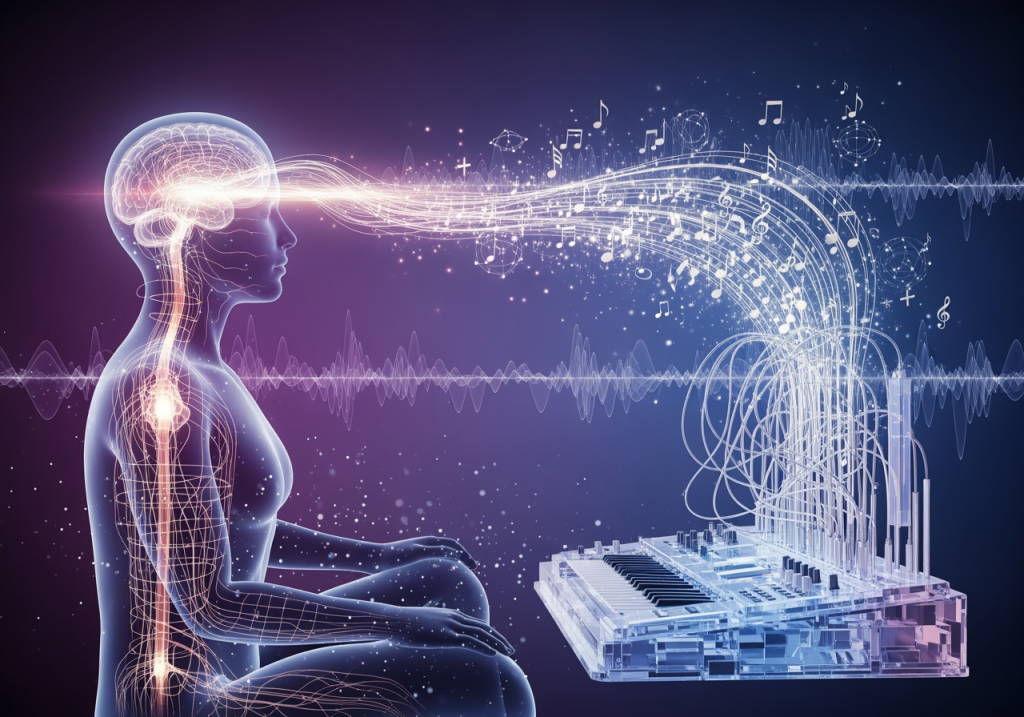 Another approach to brain-controlled music composition leverages the P300 event-related potential”a distinctive brain signal that occurs approximately 300 milliseconds after a person attends to a specific stimulus. Researchers at Georgia Institute of Technology developed MusEEGk, a P300-based brain-computer interface integrated with a music step sequencer. Users attend to a matrix of notes; when their selected note flashes, their brain produces a P300 response that the system detects and interprets as a selection command.
The system achieved an average accuracy of 70% for note selection during composition tasks. While this may seem modest, it proved sufficient for users to create melodies they genuinely enjoyed. The continuous visual and auditory feedback”users heard their selections immediately”provided a controllable means for creative expression that previous systems lacked.
More advanced implementations have achieved even better results. A 2023 study reported a Steady-State Visually Evoked Potential (SSVEP) system for music composition that obtained an information transfer rate of 14.91 bits per minute with 95.83% accuracy. Crucially, this system was successfully deployed to a severely motor-impaired former violinist who now uses it regularly for musical composition at home”demonstrating the technology’s transition from laboratory curiosity to practical assistive device.
Speech and Synthesis: The Ultimate Interface
The most sophisticated brain-computer interfaces currently in development target speech restoration”a domain directly relevant to musical interfaces. In 2024, researchers at UC San Francisco and UC Berkeley achieved a breakthrough: a brain-to-voice neuroprosthesis that synthesizes speech at 78 words per minute with 99% accuracy, translating brain activity into audible words in less than 80 milliseconds. This “near-synchronous voice streaming” represents the same rapid decoding capacity that devices like Alexa and Siri provide through conventional input.
These systems employ electrocorticography (ECoG)”electrode arrays placed on the brain’s surface during neurosurgery”to capture high-resolution neural activity. Machine learning algorithms decode the patterns associated with intended speech, then feed these patterns to a speech synthesizer. The breakthrough came from recognizing that the brain’s speech motor cortex contains representations not just of sounds, but of articulatory gestures”the motor commands that would produce those sounds if the person could move their vocal tract.
This principle applies directly to musical interfaces. Just as the motor cortex maintains representations of speech gestures, it also contains representations of instrumental playing gestures. A pianist’s motor cortex encodes not just “C major chord” but the specific finger configurations and force patterns required to produce that chord with particular expression and timing. Future BCIs could capture these rich motor representations directly, translating them into synthesis parameters with higher fidelity than any keyboard could provide.
The Quantum Music Frontier
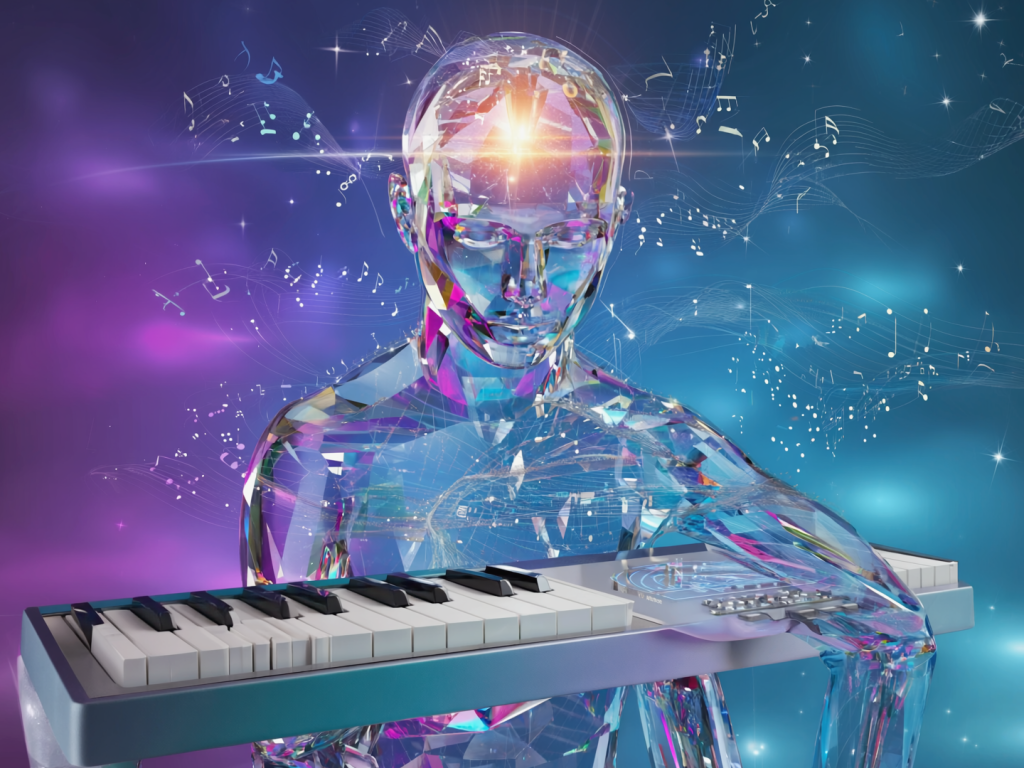 Even as brain-computer interfaces progress toward clinical deployment, a more exotic technology beckons: quantum computing for music composition. Professor Eduardo Reck Miranda at the University of Plymouth has pioneered this nascent field, using IBM’s seven-qubit quantum computers to generate musical compositions in real-time.
Miranda’s quantum compositions exploit phenomena impossible in classical computing: superposition (where quantum bits exist in multiple states simultaneously until measured) and entanglement (where quantum particles maintain correlations regardless of distance). These properties enable fundamentally new approaches to algorithmic composition. When Miranda performs quantum music, he and colleagues use laptops connected to a quantum computer over the internet to control qubit states via hand gestures; measurements of these qubits determine characteristics of synthesized sounds.
The quantum approach offers composers access to genuine randomness”not the pseudo-randomness of classical algorithms, but the fundamental unpredictability of quantum measurement. This creates music that contains “tantalizing echoes” of performer input while remaining genuinely unpredictable, functioning “more like a partner than an imitator.” Miranda imagines performances where a composer assigns a quantum algorithm to a piece, then lets the quantum computer’s measurements unfold the composition in a way that remains unique for that particular moment.
While current quantum music applications could be simulated on classical computers, this limitation stems from the restricted capabilities of today’s small-scale quantum devices. As quantum computers scale to hundreds or thousands of qubits, they will enable musical processes genuinely impossible to replicate classically. Quantum algorithms excel at exploring vast possibility spaces simultaneously”precisely the capability needed for generating novel musical structures that human composers wouldn’t conceive independently.
Current Limitations and the Path Forward
Despite these remarkable advances, contemporary brain-computer musical interfaces face significant constraints. Non-invasive EEG-based systems suffer from low spatial resolution and signal-to-noise ratio, limiting the complexity of control they can provide. Invasive systems offer better performance but require neurosurgery, restricting their use to patients with severe disabilities who would benefit sufficiently to justify the surgical risk.
Information transfer rates remain modest: even sophisticated BCIs achieve only 14-40 words per minute for text generation or 15-40 bits per minute for musical control”far below the bandwidth of physical instruments. Latency, while improving, still introduces perceptible delays between intention and sound. Training periods are substantial; users typically require hours to days of practice before achieving proficient control.
Perhaps most critically, current systems lack the expressive nuance of traditional instruments. A skilled pianist can control dozens of parameters simultaneously”the attack, sustain, and release of each note; subtle variations in timing and dynamics; pedal effects”with millisecond precision. Current BCIs can select pitches and basic parameters but struggle to capture the micro-variations that distinguish mechanical performance from musical expression.
Yet the trajectory is clear. Information transfer rates double every few years as machine learning algorithms improve neural signal decoding. Hybrid systems that combine EEG with functional near-infrared spectroscopy (fNIRS) or other modalities achieve better performance than any single technique. The development of minimally invasive interfaces that thread through blood vessels to reach the brain without open surgery promises to make high-bandwidth BCIs accessible to broader populations.
The Direct Connection: Brain-to-Synthesizer Interface
Eliminating the Mechanical Intermediary
The first phase of the neural music revolution will eliminate the keyboard while retaining external synthesizers. Instead of fingers pressing keys, neural signals will flow directly from motor cortex to synthesizer control inputs. This transition represents not merely replacing one input method with another, but fundamentally reimagining the relationship between intention and sound.
Consider the current pathway: a composer imagines a phrase, which activates prefrontal planning areas (20-50ms delay), which send signals to motor cortex (10-20ms), which propagate through spinal cord (10-20ms) and peripheral nerves (10-30ms) to muscles (10-20ms), which move fingers to press keys (50-100ms), which trigger mechanical and electronic systems in the synthesizer (1-20ms). Total latency from thought to sound: approximately 110-260 milliseconds”nearly a quarter second.
A direct brain-synthesizer interface collapses this chain dramatically. Implanted electrode arrays in motor cortex could detect neural activity associated with intended movements at the planning stage, before signals even reach the spinal cord. Machine learning algorithms”trained on the individual’s neural patterns during natural playing”would decode these signals and transmit them directly to the synthesizer as MIDI or Open Sound Control (OSC) messages. Total latency: potentially 20-50 milliseconds, approaching the 10-20ms threshold of human temporal perception.
Neural Training and Adaptation
The interface would require a training period during which the system learns to decode the user’s unique neural signatures. Initially, the musician would play their instrument conventionally while the BCI records motor cortex activity associated with each action. Over days or weeks, machine learning algorithms would build a model mapping neural patterns to musical gestures”much as current speech BCIs learn to map brain activity to phonemes and words.
Critically, this model would capture not just what note to play, but how to play it. The motor cortex encodes force, timing, and expression along with pitch information. A skilled pianist thinking “play C with a sharp attack and quick decay” generates a different neural signature than “play C with a gentle onset and sustained resonance.” The BCI would learn these distinctions, translating them into synthesizer parameters”amplitude envelope, filter cutoff, velocity, aftertouch”automatically.
The system would also adapt over time through closed-loop learning. When the synthesizer produces a sound, the brain’s auditory cortex processes it and compares it to the intended sound. If these match, the brain’s reward circuits activate, strengthening the neural pathways that produced the correct output”a process called reinforcement learning. If they mismatch, error signals propagate back to motor areas, refining subsequent attempts. This natural learning mechanism, operating continuously during practice, would progressively improve the accuracy and expressiveness of neural control.
Expanded Expressive Dimensions
Direct neural control unlocks expressive dimensions impossible with physical keyboards. Current instruments are constrained by biomechanics”humans have ten fingers, limited hand span, maximum movement speed. A brain interface faces no such limits. The motor cortex could, in principle, control dozens of parameters simultaneously, enabling polyphonic compositions where each voice has independent articulation, timbre, and spatial position.
Consider a simple scenario: composing a four-voice fugue. Currently, this requires either recording each voice separately (breaking creative flow) or playing all four simultaneously (requiring extraordinary technical skill and often compromising expressive detail). With direct neural control, the composer simply thinks the four voices simultaneously. Motor cortex regions that would normally control different fingers”or even body parts not conventionally used for music, like toes or neck muscles”could instead modulate different voices independently. The synthesizer would render all four streams in real-time.
More radically, neural interfaces could access brain regions beyond motor cortex. The anterior cingulate cortex (ACC) and medial prefrontal cortex (mPFC)”active during creative improvisation”could modulate macro-level parameters like harmonic tension, rhythmic complexity, or timbral evolution. The amygdala and reward circuits, which engage during emotional musical experiences, could shape affective qualities of the composition. The musician would still consciously direct the overall structure, but deeper brain regions would contribute layers of nuance reflecting their emotional and aesthetic state in real-time.
Technical Implementation
 The hardware for brain-to-synthesizer interfaces likely will adopt the Neuralink N1 architecture or similar designs: a coin-sized implant containing a custom chip with 1,024 electrode channels, wireless data transmission, and inductive charging. Surgical robots would implant thread-like electrode arrays into motor cortex with minimal tissue damage. Unlike earlier rigid arrays like the Utah array, these flexible electrodes would move with the brain, reducing inflammatory responses and improving long-term signal stability.
The implant would wirelessly transmit neural data to an external receiver connected to the synthesizer. Latency would be dominated by neural signal processing”the time required to sample brain activity, extract features, and run classification algorithms. With modern neuromorphic processors (specialized chips that efficiently implement neural network algorithms), this processing could occur in 5-10 milliseconds. Add 1-2ms for wireless transmission and 1-5ms for synthesizer response, yielding total system latency of 7-17ms”genuinely imperceptible to human musicians.
Crucially, the system would be bidirectional. Not only would it decode motor intentions into sound, but it could provide neural feedback”subtle electrical stimulation delivered to sensory cortex to create phantom sensations of touch, confirming that a note was played. This tactile feedback, lacking in conventional BCIs, would restore the proprioceptive loop that skilled instrumentalists rely upon, potentially accelerating learning and improving control precision.
The Full Integration: Brain-to-Computer Composition
Beyond Synthesis to Creation
The second revolution extends beyond performance to composition itself. Rather than translating motor intentions into synthesizer control, a full brain-computer composition interface would capture creative thought directly”the musical ideas arising in prefrontal cortex, default mode network, and other creativity-associated regions”and translate them into finished compositions without requiring explicit motor planning.
This system would monitor activity in the medial prefrontal cortex (mPFC) and posterior cingulate cortex (PCC), core nodes of the default mode network where abstract musical concepts emerge. When a composer imagines “a soaring melody over a descending bass line with increasing harmonic tension,” distinctive patterns activate in these regions. Advanced machine learning algorithms”trained on the individual composer’s previous works and their associated neural signatures”would decode these patterns into formal musical structures.
The computer would then elaborate these structures into detailed scores. Just as modern large language models can generate complete essays from brief prompts, future music AI”guided by neural signals indicating the composer’s intent and aesthetic preferences”would generate full orchestrations, voice leading, rhythmic patterns, and expressive markings. Critically, the composer would remain in control, using focused attention to approve, modify, or reject each element as the AI proposes it.
The Quantum Composition Engine
Integrating quantum computing transforms this process from deterministic elaboration to genuine co-creation. While classical AI generates music by optimizing learned patterns”essentially sophisticated imitation”quantum algorithms explore possibility spaces in fundamentally different ways.
A quantum composition engine could leverage quantum annealing to solve the combinatorial optimization problems inherent in composition: selecting chord progressions that maximize harmonic interest while maintaining coherence, distributing rhythmic events to create compelling polyrhythms, orchestrating timbres to avoid masking while preserving textural clarity. These are precisely the type of problems where quantum algorithms offer exponential speedups over classical computation.
More intriguingly, quantum superposition enables genuine parallel exploration of musical alternatives. A classical system must evaluate one possibility, then another, then another. A quantum system evaluates all possibilities simultaneously until measurement collapses the superposition into a specific outcome. The composer’s neural signals would guide this collapse”high activity in reward circuits would increase the probability of measuring musical structures the brain finds appealing, while activity in error-monitoring regions would suppress unappealing structures.
Quantum entanglement could enable novel compositional structures. Imagine entangling qubits representing melodic voices, such that measurements determining one voice’s evolution immediately constrain the others. This creates musical dependencies that are neither deterministic (like strict canon) nor independent (like free counterpoint) but exist in a uniquely quantum superposition of related and unrelated”potentially generating contrapuntal textures impossible to conceive through conventional means.
Neuromorphic Processing and Real-Time Evolution
 The composition interface would employ neuromorphic processors”chips that implement spiking neural networks mimicking biological neural computation. These processors excel at recognizing patterns in continuous streams of data with minimal power consumption”perfect for real-time BCI applications. A neuromorphic chip could process motor cortex, prefrontal cortex, and limbic system signals simultaneously, extracting the multi-dimensional intent vector that guides composition.
One particularly promising architecture uses spike-timing-dependent plasticity (STDP)”a learning rule where synaptic strength adjusts based on precise timing of pre- and post-synaptic neural spikes. This enables online learning; the system continuously refines its model of the composer’s preferences as composition proceeds, adapting to the creator’s evolving artistic vision within a single session.
The composition process would unfold as a dialogue. The composer imagines a musical gesture; the system generates a realization; the composer’s brain responds with approval (activating reward circuits) or criticism (activating error-monitoring circuits); the system adjusts and proposes alternatives; the cycle repeats. This bidirectional flow”human creativity guiding AI elaboration, AI proposals sparking new human ideas”would occur at thought speed, limited only by the 300-500ms required for conscious evaluation of each proposal.
Toward Musical Telepathy
The ultimate expression of brain-computer composition interfaces would enable direct brain-to-brain musical communication”true musical telepathy. Two composers wearing BCIs could entangle their creative processes, with each person’s neural activity influencing the other’s compositional space in real-time.
Research has already demonstrated that musicians performing duets show synchronized brain activity, particularly in prefrontal regions associated with planning. A BCI system could artificially enhance this synchronization, using transcranial electrical stimulation to entrain one musician’s brain rhythms to match their partner’s. Studies of brain-to-brain interfaces have shown that synchronized neural oscillations between individuals improve coordination and mutual understanding.
In this scenario, Composer A imagines a theme, generating a neural signature detected by their BCI. This signature modulates the quantum state of a qubit, which is entangled with a second qubit linked to Composer B’s BCI. When Composer B’s system measures their qubit (triggered by attention to the collaborative composition task), the measurement outcome”constrained by quantum entanglement”biases their neural activity toward states complementary to Composer A’s contribution. Composer B then experiences quasi-spontaneous musical ideas that harmonize with Composer A’s intent, without either party explicitly communicating through conventional channels.
While this sounds like mysticism, it’s merely quantum mechanics and neuroscience working in concert. The quantum entanglement ensures mathematical correlation between measurement outcomes, while BCIs translate these outcomes into neural modulation. The subjective experience”ideas arising that mysteriously complement one’s collaborator”would feel magical, but the mechanism is entirely physical.
The Timeline: When Will This Future Arrive?
Near-Term Milestones (2025-2030)
The first brain-to-synthesizer interfaces for musical applications will likely reach human trials within the next 3-5 years. Neuralink received FDA breakthrough device designation in 2023 and began human implantation trials in 2024. While their initial focus targets motor restoration for paralysis patients, musical applications would require only software modifications to systems already under development.
Synchron, which received FDA approval for human trials earlier than Neuralink, has already implanted their endovascular stentrodes in multiple patients. Their less-invasive approach”threading electrodes through blood vessels rather than open brain surgery”makes them particularly well-positioned for applications like music where surgical risk must be justified against benefit.
By 2027-2030, we should see the first demonstrations of proficient musical control via direct brain-synthesizer interfaces, likely with paralyzed musicians as pioneering users. These early systems will operate at information transfer rates of 40-60 bits per minute”sufficient for real-time melodic control but insufficient for complex polyphonic performance.
Non-invasive systems will advance more rapidly. Already, EEG-based BCIs achieve 90 words per minute typing and 40 words per minute through thought alone. Adapting these to musical control is primarily a software challenge. By 2028, we may see consumer-grade EEG headsets capable of basic musical control”selecting notes from a scale, triggering pre-programmed passages, modulating simple parameters”integrated with popular music production software.
Medium-Term Developments (2030-2040)
The 2030s will witness the transition from experimental to practical brain-computer musical interfaces. Invasive BCIs will achieve information transfer rates of 200-500 bits per minute as electrode counts increase from today’s 1,024 to 10,000+ channels and machine learning algorithms improve decoding accuracy. This bandwidth suffices for real-time control of complex polyphonic synthesizers with dozens of simultaneously modulated parameters.
Neuromorphic processors will mature, enabling real-time processing of massive neural datasets with milliwatt power consumption”crucial for implanted devices that must operate on battery power for years between charging cycles. Closed-loop systems that provide neural feedback will become standard, restoring the proprioceptive awareness musicians rely upon.
The first commercial brain-to-synthesizer interfaces will likely launch around 2035, initially targeting professional musicians with disabilities but expanding to able-bodied early adopters willing to undergo minimally invasive procedures for enhanced creative capabilities. Market projections suggest the BCI industry will reach $6.2 billion by 2030 and $15-20 billion by 2040, with musical applications representing 5-10% of this total.
Quantum computing for music will remain primarily a research domain through the 2030s, as quantum systems scale to 100-1000 qubits but remain too error-prone for reliable commercial applications. However, hybrid quantum-classical systems will demonstrate capabilities impossible for classical computers alone, particularly for exploring vast compositional possibility spaces and generating genuinely novel musical structures.
Long-Term Transformation (2040-2060)
By mid-century, direct brain-computer composition interfaces could be commonplace, at least among professional composers and serious amateurs. Invasive BCIs will achieve information transfer rates approaching 1,000-2,000 bits per minute”comparable to natural speech production”enabling thought-speed composition with full expressive control.
The distinction between “composing” and “performing” will blur. A composer might improvise a symphony directly through neural interface, the quantum-enhanced AI system elaborating their high-level intentions into detailed orchestration in real-time. The result would be simultaneously composed and performed, existing only in that moment of creative flow.
Quantum computers will mature into practical compositional tools, offering 1,000-10,000 qubits with error correction enabling reliable long-duration calculations. Composers will routinely employ quantum algorithms to generate harmonic structures, rhythmic patterns, and timbral evolutions genuinely impossible to conceive through conventional thought. The quantum system won’t replace human creativity but augment it”serving as a muse that suggests possibilities the composer would never imagine independently, while remaining under the composer’s ultimate control.
Educational paradigms will shift dramatically. Instead of spending years developing mechanical technique, aspiring musicians will focus on musical thinking”harmony, counterpoint, orchestration, aesthetics. A neural interface provides instant access to any instrumental technique the AI has learned, democratizing music creation while simultaneously raising the bar for what constitutes exceptional composition. Excellence will lie not in finger dexterity but in depth of musical imagination and sophistication of aesthetic judgment.
Speculative Horizons (2060+)
Beyond mid-century, speculation becomes increasingly uncertain, but several trajectories seem plausible. Brain-to-brain musical communication could enable collective compositions where dozens of minds contribute simultaneously, their neural activity synchronized and blended by AI systems to produce unified artistic works reflecting genuine group consciousness.
Integration with artificial general intelligence”should it emerge”might enable composers to work with AI collaborators possessing genuine musical understanding rather than pattern-matching algorithms. These AGI partners could challenge the composer’s assumptions, propose radical alternatives, and engage in aesthetic debates that sharpen the final work.
Most radically, future neurotechnology might enable direct modulation of creative neural networks”temporarily enhancing activity in brain regions associated with originality, fluency, or aesthetic sensitivity. This would raise profound questions about authorship and authenticity: is music generated by chemically or electrically enhanced neural activity genuinely “yours,” or does it represent a collaboration between your natural mind and artificially boosted circuits? Society will wrestle with such questions much as it currently struggles with AI-assisted composition.
The Barrier Between: Technical and Societal Challenges
 Multiple barriers could slow or derail this timeline. Technically, achieving the neural decoding accuracy required for complex musical expression remains formidable. The motor cortex contains representations of thousands of possible movements, each activating overlapping populations of neurons. Disambiguating these overlapping patterns to extract precise musical intentions challenges current machine learning techniques.
Biocompatibility persists as a critical issue. Current electrode arrays provoke inflammatory responses that degrade signals over months to years. Developing materials and coatings that the brain tolerates indefinitely requires ongoing research. Wireless power transfer must improve dramatically; current inductive charging systems require external coils placed on the scalp, limiting practicality for musicians who need freedom of movement during performance.
Societally, many people will resist brain implants regardless of benefits. Surveys suggest that even if BCIs become safe, effective, and affordable, 30-50% of populations would refuse them due to concerns about surveillance, identity alteration, hacking, or simply “playing God” with neural function. Musical BCIs, being less medically necessary than those treating paralysis, may face especially strong resistance.
Regulatory frameworks lag far behind technology. The FDA has granted breakthrough device designation to several BCIs but full approval processes take 5-10 years and cost $50-100 million per device. Most countries lack clear guidelines for human enhancement technologies”implants that go beyond restoring function to augmenting healthy individuals. Until such frameworks emerge, commercial development of musical BCIs for non-disabled users will face legal uncertainty.
Economic barriers matter too. Early BCIs will cost $100,000-$500,000 per implant when accounting for surgery, follow-up care, and device maintenance. Only wealthy individuals or institutions could afford them, potentially creating a bifurcated musical world where enhanced composers dominate while unaugmented musicians struggle to compete. Whether insurance companies or public health systems will cover musical BCIs”arguably an enhancement rather than treatment”remains uncertain.
Conclusion: The Symphony of Tomorrow
We stand at the threshold of transformation as profound as the invention of musical notation or the piano itself. For millennia, music has been constrained by the bottleneck between imagination and expression”the imperfect translation of mental sound into physical gesture, mechanical vibration, and finally acoustic pressure waves. Neural interfaces promise to collapse this chain, allowing music to flow directly from mind to machine with minimal loss of nuance or delay.
The journey from keyboard to quantum-enhanced neural composition will unfold across decades, not years. Current BCIs can select simple melodies; future systems will capture the full dimensionality of creative thought. Today’s synthesizers contain dozens of oscillators and filters; tomorrow’s quantum-enhanced instruments will generate timbres and structures impossible to conceive through classical computation. Present-day musicians practice for decades to master mechanical technique; future composers will focus entirely on developing musical imagination, with neural interfaces providing instant access to any technical skill the AI has learned.
This transition will challenge our understanding of creativity, authorship, and human nature. Is music generated by AI elaboration of neural signals genuinely “composed” by the human, or does it represent a collaboration between person and machine? Does direct neural control make music more authentic”being closer to the composer’s true intent”or less authentic”bypassing the dialogue between intention and mechanical constraint that has shaped musical evolution? When quantum randomness contributes to compositional decisions, who is the author”the composer who set up the conditions, the quantum computer whose measurement outcomes shaped the result, or some emergent combination?
These questions lack clear answers, but they need not paralyze progress. Just as recording technology initially met resistance (“music should only exist in live performance!”) before transforming musical culture in overwhelmingly positive ways, brain-computer musical interfaces will likely provoke initial skepticism before revealing unforeseen creative possibilities. The composers who embrace these tools”who learn to think musically in ways that leverage rather than fight neural control, who develop artistic sensibilities suited to quantum-enhanced creation”will produce works we cannot yet imagine.
The keyboard served humanity well for centuries, but its time is ending. The future belongs to those who can hear symphonies in their minds and, without moving a finger, conjure them into existence”composers who paint with neural fire on canvases of quantum probability, creating the impossible music of tomorrow. That future is not arriving; it has already begun.
Summary for Mere Mortals
In the future, musicians will compose directly from their thoughts through brain implants connected to quantum computers, eliminating the need for keyboards and translating imagination into sound at the speed of pure thinking.




Be the first to comment